




Minister of Culture Li Yuan presents the First-Class Cultural Medal to Liu Kuo-sung. From left to right: Minister of Culture Li Yuan, artist Liu Kuo-sung and Lin Lee, CEO of the Liu Kuo-sung Foundation | Photo courtesy of Ministry of Culture (Taiwan)
Liu Kuo-sung recently attended “Finale: Resolution of the Artlib Case and Rights Restoration Briefing,” hosted by the Ministry of Culture (Taiwan). Alongside numerous affected artists, he witnessed the formal conclusion of a long-standing dispute regarding unauthorized licensing and rights assignment. This event marked not only the restoration of legal rights but also a significant milestone in rebuilding order and trust within Taiwan’s arts community after years of turmoil.
The Global Chinese Art Network (Artlib) scam arose from the activities of Lin Chu-nan (林株楠), the late head of Global Chinese Art Network Co. Ltd (全球華人藝術網有限公司, Artlib), and the Jinjiang Tang Cultural and Educational Foundation (財團法人錦江堂文教基金會). Under the guise of the Ministry of Culture’s subsidized publishing and establishing project, Lin induced over 700 artists across generations to sign highly inequitable agreements. These contracts involved improper licensing, exclusive agency and the permanent assignment of copyrights, severely impacting the artistic ecosystem. Since 2017, the Ministry of Culture has operated a specialized task force and has referred the case for criminal investigation. While criminal proceedings remain ongoing, the achievement of “rendering agreements invalid and restoring rights” was made possible by Liu Kuo-sung. He leveraged a TWD5.17 million debt claim—awarded to him in a successful private lawsuit—to negotiate with Lin Chunan’s heirs. In exchange, the heirs relinquished the ill-gotten rights, rendering thousands of unseized agreements void and alleviating the long-term anxieties of many artists.
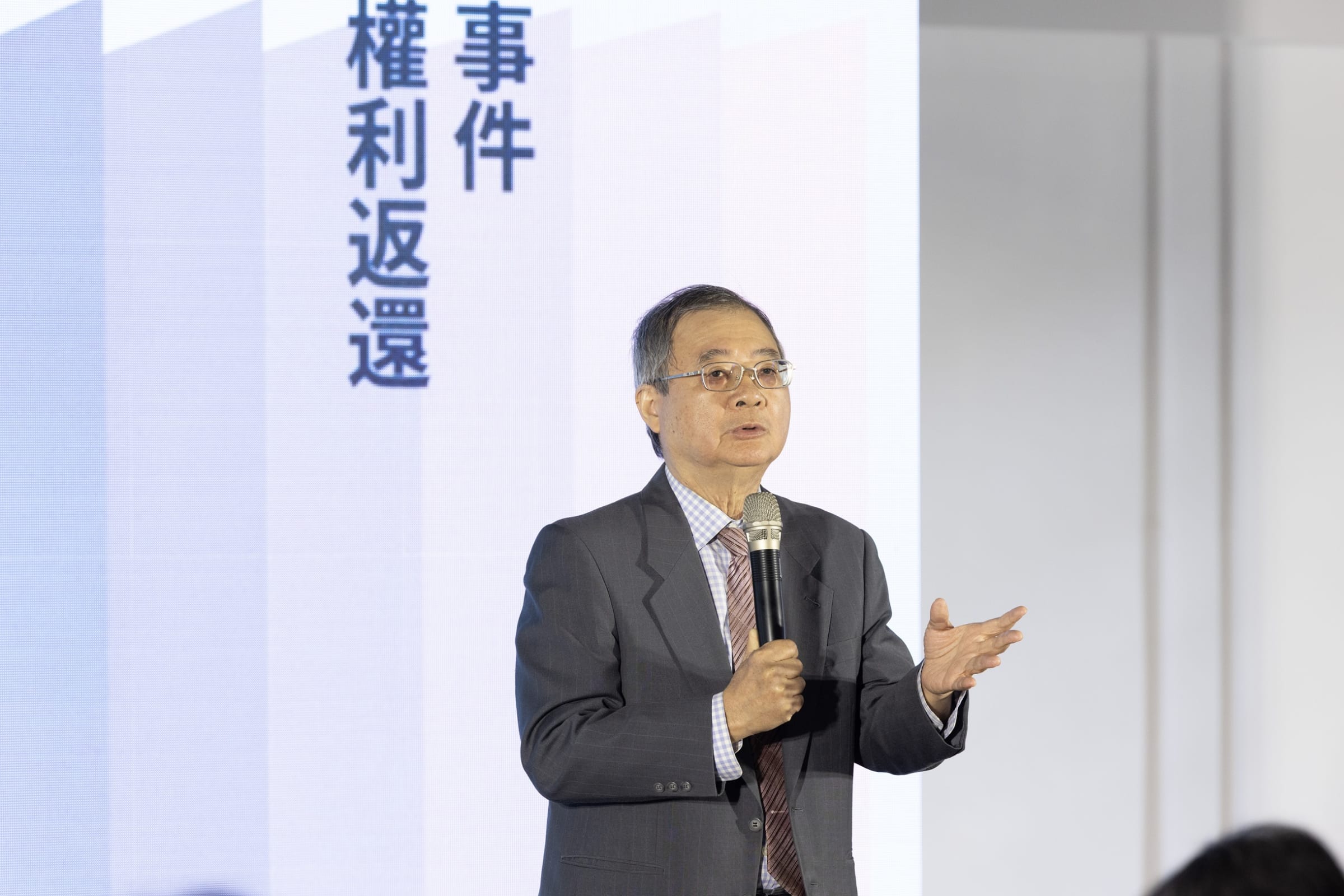
During the briefing, Hu Chung-wei (胡中偉), an attorney at North Star Copyright Law Office (北辰著作權事務所) explained that the case began in 2014 when Liu Kuo-sung, while pursuing a defamation lawsuit, uncovered Artlib’s illegal copyright infringements. It was then revealed that many artists had signed documents under information asymmetry without retaining copies. Hsiao Hsiung-lin (蕭雄淋), Managing Partner of North Star Copyright Law Office, added that over 6,000 such improper agreements were signed, affecting more than 800 artists. The legal battle spanned multiple court levels and was exceptionally arduous. Ultimately, it was Liu’s decision to use his personal debt claim as leverage that opened the door to the collective restoration of rights. The pro bono legal team expressed deep gratitude, noting that this resolution was achieved through the persistent support of the affected artists, lawyers, the Ministry of Culture and civil society.
Liu Kuo-sung attended the ceremony to receive his medal, with his eldest daughter Lin Lee delivering remarks on his behalf. She noted that the case evolved from a defamation suit to a collective restoration of rights—a transformation her father describes as “turning a misfortune into a blessing. When asked by lawyers if he would forfeit his debt claim to help others, Liu responded without hesitation: “If it can save everyone, it must be done. Lin Lee also urged the public to respect copyrights, emphasizing that they are the fundamental pillars of creativity, research and publishing.
Minister of Culture Li Yuan (李遠) concluded the meeting by thanking the artists, legal teams and supporters, emphasizing the values of kindness, justice and institutional integrity in a sound arts and culture ecosystem. At the same time, the Ministry of Culture presented the First-Class Cultural Medal to Liu Kuo-sung, honoring his profound contribution to protecting the arts environment and his selfless dedication at a critical juncture.