-
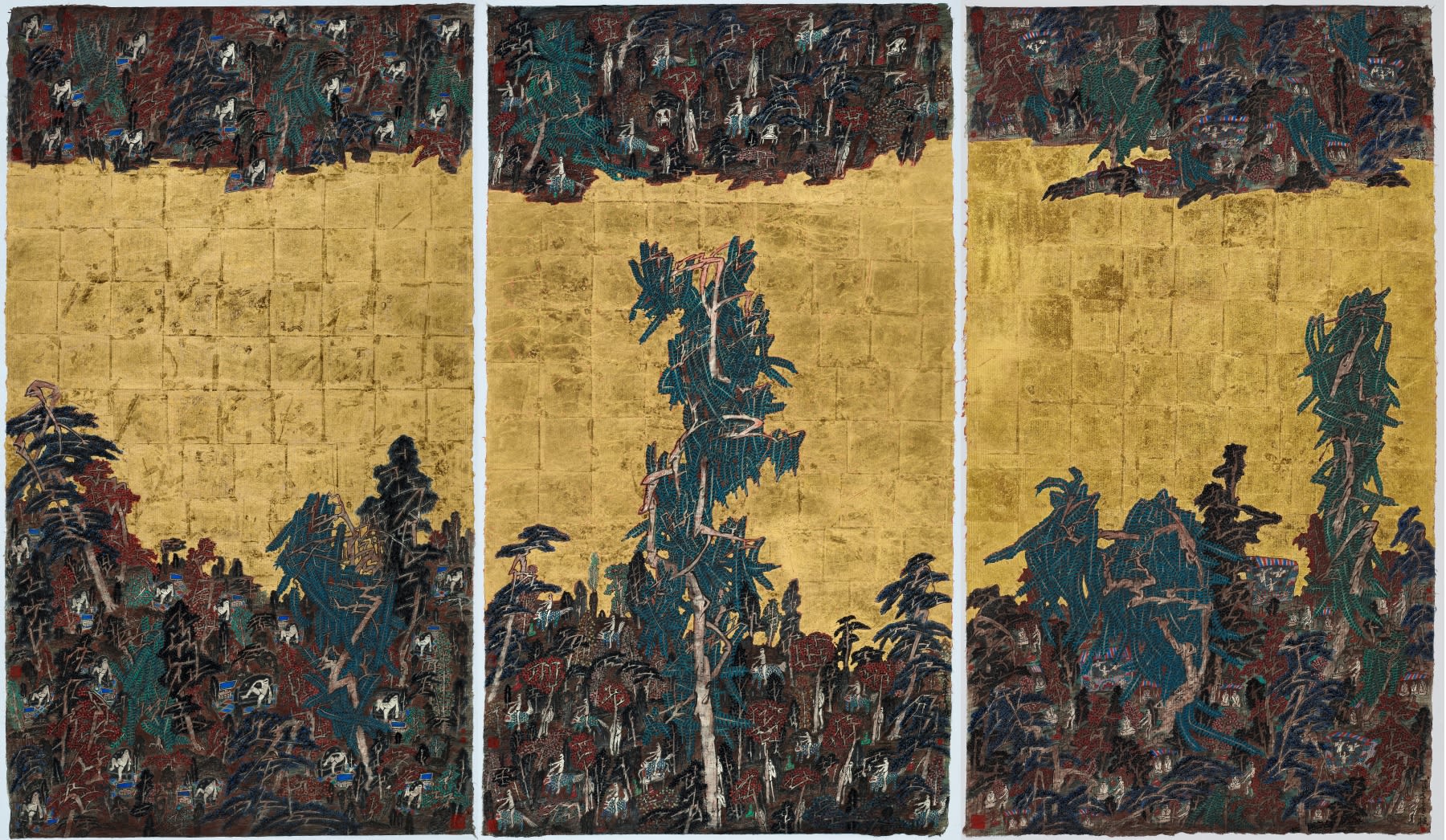
After two rounds of judging, the Liu Kuo-sung Foundation and The Ink Society were delighted to announce Bian Kai the Winner of the Second Liu Kuo-sung Ink Art Award, with a cash prize of HKD100,000. Honorable Mentions were awarded to Barbara Tak-yee Choi and Tseng Ting-yu. The award ceremony was held on October 10, 2021 at Fine Art Asia, and the works of the three winners were exhibited at The Ink Society’s Special Exhibition Zone. Liu Kuo-sung presented the awards via video link.
Nominators
Liu Zijian (Artist; Researcher, China National Academy of Painting, Beijing; Professor, College of Art and Design, Shenzhen University, Shenzhen)
Pai Shih-ming (Professor and Head of Department of Fine Arts, National Taiwan Normal University, Taipei)
Wang Chunchen (Professor and PhD supervisor, Central Academy of Fine Arts; Director, CAFA Art Museum, Beijing)
Xia Kejun (Professor, School of Liberal Arts, Renmin University of China; curator, Beijing)
Josh Yiu (Director, Art Museum, Chinese University of Hong Kong, Hong Kong)
Judges
Roz Hammers (Associate Professor, Department of Art History, University of Hong Kong, Hong Kong)
Huang Kuang-nan (Artist; Honorary Professor, National Taiwan Normal University and National Taiwan University of Arts, Taipei)
Kingsley Liu (Director, The Ink Society, Hong Kong)
Liu Kuo-sung
Xue Yongnian (Professor and PhD supervisor, Central Academy of Fine Arts, Beijing)
-
Roz Hammers, PhD., on the work of Bian Kai:
“︀
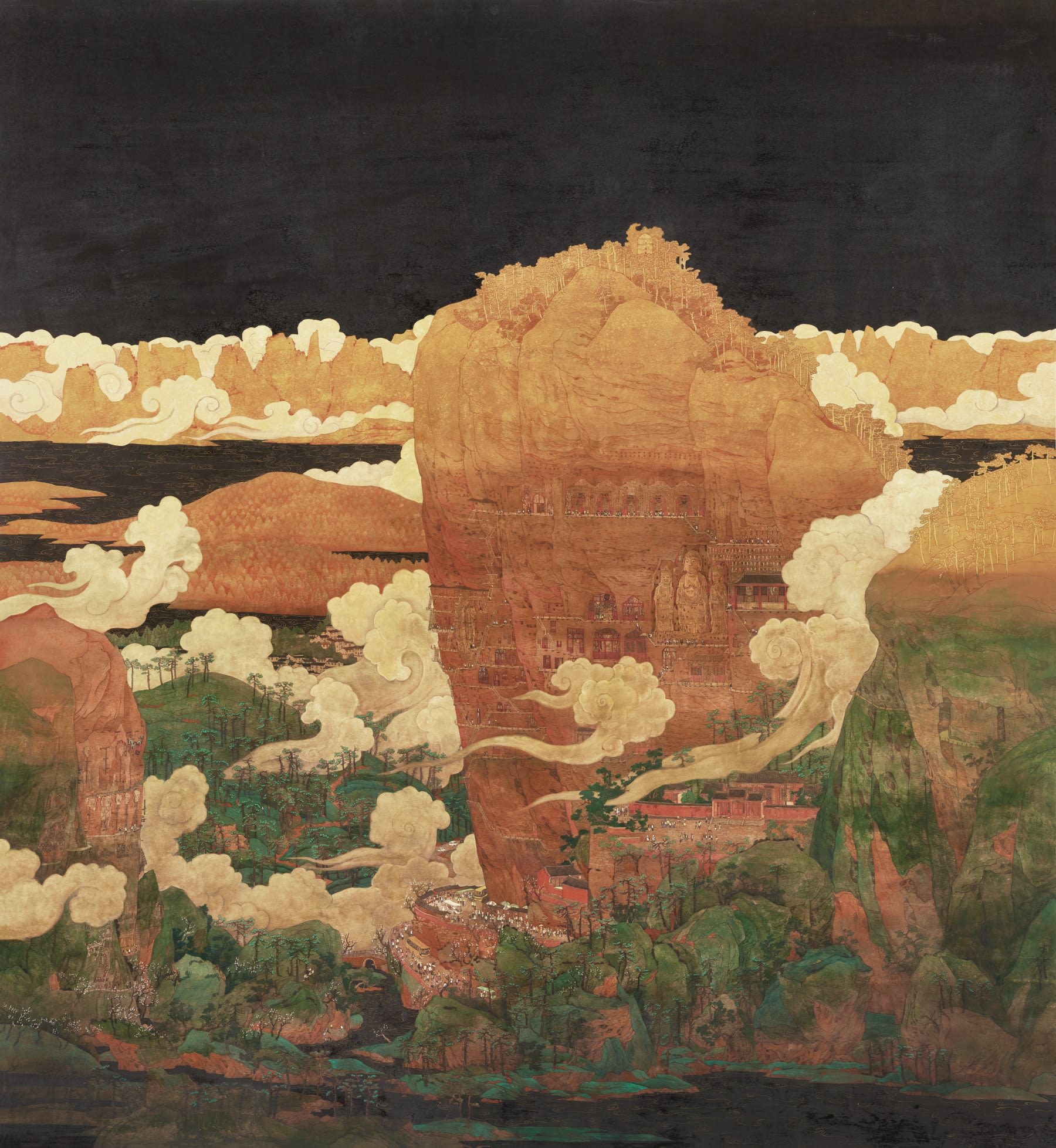
The three paintings that the artist Bian Kai submitted to the competition greatly impressed all members of the judging committee. He was unanimously awarded top marks. The three works show great command of the skills and techniques of ink painting while depicting highly innovative interpretations of their subject matter. His Picture of a Peach Orchard 桃園圖 invites viewers to reconsider a novel vision of a fisherman entering into an area of peach trees, a location poetically associated with an ideal society. As we explore the murky washes of the painting, we find we are in a very different space. The painting Winter Solstice 冬⾄ grants us a view of the festivities of a traditional Chinese holiday that seems timeless, but details suggest the setting is a late 20th-century northern village. Animals and humans are detailed with quaint frankness through brushwork that reveals masterful naturalism. Bian Kai has rendered the objects with a sense of concreteness in both the foreground and background. Finally, the monumental Misty Rain at Maiji Mountain ⿆積煙⾬ is a thoroughly innovative integration of Tang and Song painting techniques. Grand in scale with precise and detailed brushwork, the painting’s coloring evokes comparisons with the elegant blue-and-green Tang landscape tradition. With mountains that engage with the Song grandeur of nature, the color palette challenges expectations. The blue of the Tang painting is replaced by a velvet-like, but ominous, black, compelling viewers to reconsider humanity’s relationship with nature. Bian Kai’s paintings display virtuosity in a variety of styles, from monochromic ink to intensely colored pigments. His themes give nuanced interpretations that update and challenge established perspectives.
”︀
Professor Huang Kuang-nan on Bian Kai’s work:
“︀
In the representation of form and texture in ink painting, Bian Kai’s paintings possess two levels of aesthetic appeal, cultural and historic. The human spirit and history come alive in his paintings. The painted expression, the artistic vision and the artist’s state of mind are unified, yet the works have the power to move the viewer with a physical presence. His paintings have several distinct characteristics:
Firstly, Bian transforms the content of his painting into a literary or historical theater. Although it is a two-dimensional visual space, in terms of composition, he uses the ink as a backdrop, and ‘stage lighting’ to set up the interplay of light and shadow, placing the main subject in the light, thus defining the focus of the subject matter, and then inserting and ‘positioning’ appropriately placed elements, which, whether an urban landscape or a tranquil mountain forest, serve as background to the painting. The main character is always vibrant social life, imbuing the scene with vitality and interest. This guides the viewer onto the painted stage, where they may choose to be nostalgic in a cup of tea, or roam through the countryside, or travel through scenes of history, immersed in the experience without being confined by the painted scene.
Secondly, Bian’s work reimagines the possibilities of cultural heritage: its historical evolution and natural changes, and study of its assets. There is both knowledge and perception in the created scene, and established texts of classical Chinese culture and elements of reality are cleverly arranged alongside each other. Beyond the everyday lives of ordinary people, viewers seek solace in ancient temples. Inspiration from mythology, the recreation of culture, and ideal life exemplied, for example by the ethereal sense of beauty of the Wei and Jin dynasties, reappear on the painting surface. Whether drawing upon the past to create the present or using history as a context for regeneration, the work is imbued with symbolism and imagery, representing a new force in ink painting aesthetics. When the painting reveals a knowable, perceptible and attainable state of mind, the creative consistency becomes a standard for public aesthetic appreciation.
Thirdly, Bian’s technical skill and dedication, while deepening the tenor of the painting, possess a sense of inevitable harmony in the creation of beauty. His wholehearted dedication to each painting is evident and sincere. Apart from the technical perfection that expresses the painting’s vision, his depth of aesthetics and his imagery—for example, the way he narrates an event from beginning to end with a clear concept—allow the viewer to immediately receive his creative commentary and perceive the unspoken meaning within the painting.
”︀
-

-
-
Second Liu Kuo-sung Ink Art Award 2021
Current viewing_room